
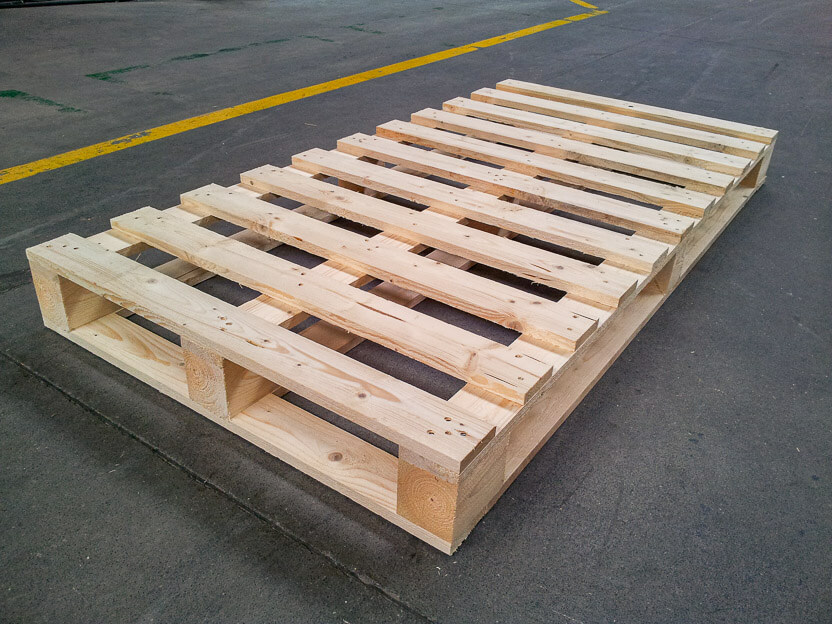
Pallets are one of the most important yet often overlooked components of modern logistics. They provide a stable platform for storing, handling, and transporting products across warehouses, distribution centers, trucks, ships, and retail facilities. However, not every pallet design is suitable for every application. A well-designed pallet must balance strength, weight, durability, cost, safety, and ease of handling. Practical pallet design can help businesses reduce product damage, improve warehouse efficiency, and optimize transportation.
Understanding the Basics of Pallet Design
Pallet design refers to the way a pallet is constructed to support specific loads and handling requirements. Designers consider factors such as dimensions, materials, deck configuration, load capacity, and forklift or pallet-jack access.
Common pallet materials include wood, plastic, metal, and composite materials. Wooden pallets remain popular because they are relatively affordable, repairable, and suitable for many general-purpose applications. Plastic pallets offer consistency, moisture resistance, and easy cleaning, while metal pallets are often selected for demanding industrial environments.
The right material depends on the products being transported, operating conditions, expected lifespan, and budget.
Choosing the Right Pallet Dimensions
Dimensions are a critical part of practical pallet design. A pallet should fit efficiently within storage racks, trucks, containers, and handling equipment. Standardized dimensions can make it easier to exchange pallets between different parts of a supply chain.
An appropriately sized pallet should also support the product without excessive overhang. Poorly matched dimensions can create unstable loads, wasted space, and increased risk of damage.
Businesses should evaluate:
- Product size and weight
- Warehouse storage systems
- Vehicle and container dimensions
- Forklift and pallet-jack requirements
- Stacking needs
- International shipping standards
Careful planning helps ensure that pallets work effectively throughout the entire distribution process.
Designing for Strength and Load Capacity
One of the primary goals of pallet design is to provide sufficient support for the intended load. A pallet must handle both static loads, such as products sitting in storage, and dynamic loads created during lifting, movement, and transportation.
Designers should consider the maximum expected weight rather than simply designing for average loads. Factors such as load distribution, stacking height, support spacing, and handling frequency can influence pallet performance.
A strong pallet does not necessarily have to be excessively heavy. Strategic placement of deck boards, blocks, stringers, or reinforcing components can provide strength while controlling material use. Efficient engineering can therefore improve durability without unnecessarily increasing pallet weight.
Improving Handling Efficiency
custom pallet design s should be designed around the equipment that will handle them. Forklifts and pallet jacks need adequate entry points and clearance to safely lift and move loads.
Four-way entry pallets, for example, allow handling equipment to approach the pallet from multiple directions. This can improve flexibility in busy warehouses and reduce unnecessary repositioning.
A practical design should also minimize sharp edges, protruding components, and structural weaknesses that could create hazards for workers or damage products.
Optimizing Pallet Stability
Load stability is another essential consideration. Products placed on a pallet should remain secure during lifting, transportation, and storage. An unstable load can shift or fall, potentially causing product loss or workplace injuries.
Deck configuration, surface characteristics, load placement, and packaging all contribute to stability. Pallet designers should consider how the pallet interacts with cartons, containers, stretch wrap, straps, and other load-securing methods.
Keeping heavier products toward the bottom and distributing weight evenly can further improve stability.
Considering Transportation and Storage
Efficient pallet design can help businesses make better use of available transportation and warehouse space. A pallet that allows products to be arranged efficiently can reduce unused space inside trucks and shipping containers.
Stackable pallet designs can also increase vertical storage capacity. When pallets are stored in racks, their dimensions and structural characteristics must be compatible with the specific racking system.
Collapsible or nestable designs may provide additional space savings when pallets are empty. These features can be particularly valuable for businesses that regularly return pallets from distribution locations.
Focusing on Durability and Maintenance
A pallet's expected service life should be considered during the design process. Reusable pallets require enough durability to withstand repeated handling, while single-use pallets may prioritize lower cost and lighter construction.
Regular inspections can identify cracked boards, damaged blocks, loose components, or other problems before they create safety issues. Repairable pallet designs can also reduce replacement costs and extend useful life.
Durability should always be balanced against purchase price. A cheaper pallet may become more expensive if it requires frequent replacement or causes product damage.
Sustainable Pallet Design
Sustainability is increasingly influencing pallet design. Businesses are looking for ways to reduce material consumption, extend pallet life, and minimize waste.
Reusable pallets can reduce the need for frequent replacements, while recyclable materials can support better end-of-life management. Lightweight designs may also reduce transportation weight and associated fuel consumption.
Wooden pallets can often be repaired and reused, while plastic pallets may have long service lives and can sometimes be recycled into new products.
Conclusion
Practical and efficient pallet design requires more than simply creating a platform for products. It involves understanding load requirements, dimensions, handling equipment, storage systems, transportation conditions, durability, safety, and sustainability. By carefully balancing these factors, businesses can create pallets that improve material handling, reduce product damage, optimize warehouse and transportation space, and control long-term costs.
A well-designed pallet ultimately becomes an important part of an efficient supply chain. Investing in the right design can deliver benefits throughout the entire journey of a product, from manufacturing and storage to transportation and final delivery.

